Our IoT software development covers everything behind industrial IoT: firmware and edge gateways in the field, the cloud platform that collects the data, and the dashboards and mobile alerts your teams act on.
We have been building IoT solutions since 2016, for agriculture, utilities, mining, manufacturing and energy. An IoT system is only as strong as its weakest link, so we cover every layer of it, from the code running on a device in the field to the alert on a technician’s phone.
Edge & Embedded Software
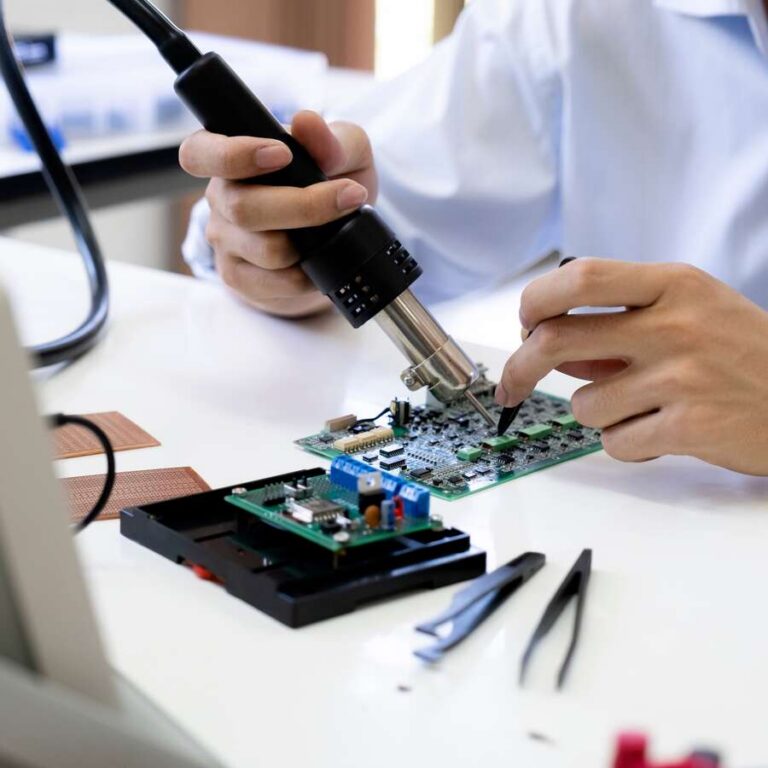
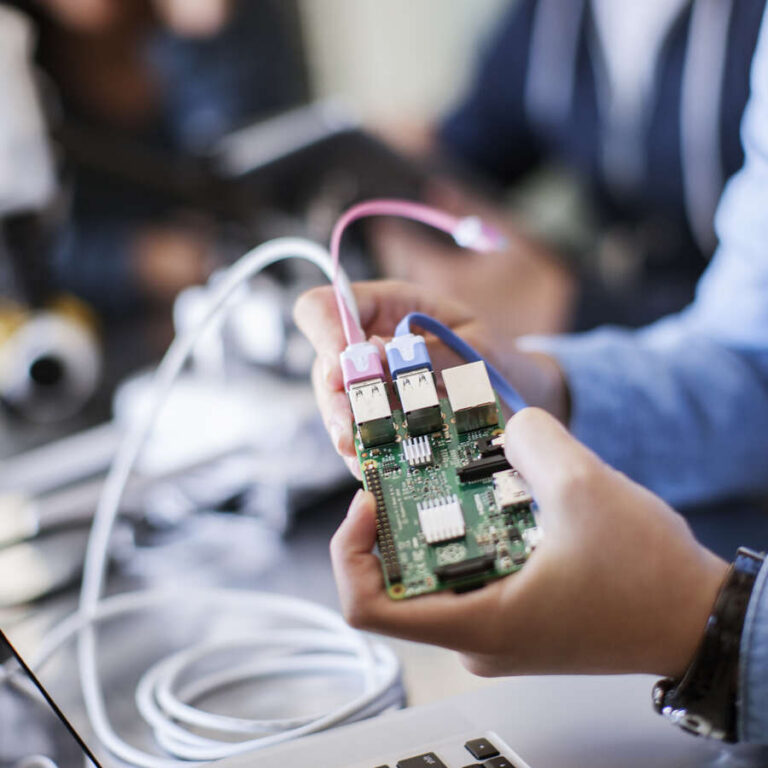
Software for the hardware in the field, from microcontrollers and custom PCBs to Raspberry Pi gateways reading your PLCs.
Microcontroller and PCB firmware
Raspberry Pi field gateways
PLC and meter integration over Modbus
Connectivity & Data Platforms
Getting data off site reliably, even when the signal isn’t, and into a cloud platform that can take the volume.
MQTT messaging over cellular or LoRa
Store-and-forward when the signal drops
High-throughput ingestion and validation
Dashboards, Alerts & Apps
Web dashboards and mobile apps that turn telemetry into decisions, and tell the right person when something needs attention.
Live dashboards, KPIs and reports
Thresholds set by your administrators
Push notifications to technicians
Device Fleet Management
Keeping devices in the field healthy and up to date without site visits, using Daployi, our own fleet management platform.
IoT projects rarely fail on any single piece. They fail at the seams: firmware that doesn’t expect the network to drop, a platform that can’t absorb a burst of data, a dashboard nobody acts on. We build every layer, so the seams are our problem rather than yours.
01In the field
Built for the field
Offline-first gateways buffer data through dropped signals and power cuts, then send it on when the connection returns.
02Security
Secure end to end
Device authentication, encrypted transport, role-based access and audit trails, from the gateway to the dashboard.
03Action
Data people act on
Thresholds and alerts designed around who needs to know, so the system leads to action, not just more charts.
Where an IoT project starts
01 · Discovery
IoT discovery usually starts with a prototype
Every site, machine and signal is different, so with IoT we often learn by building. Discovery can take a little longer than on other projects, and it’s time well spent:
1
A conversation about your sitesWhat you want to monitor or control, where your sites are and what equipment is already in place.
2
A prototype or proof of conceptUsually on one site, so you see real data from your own equipment early.
3
Refine the planThe prototype shows what the hardware, connectivity and data really look like, and we shape the approach around it.
✓
A proposal and a rollout planA plan of action with rough cost estimates, then a rollout scheduled with you, with a payment plan that suits.
02 · What to expect
Decisions based on real data, not assumptions
A prototype takes the guesswork out of an IoT project. Before you commit to a full rollout, you’ll know what the devices can read, how reliably data gets off site and roughly what it will cost to run.
You see it working on your own site before you commit to the rest.
Every project is different
Our projects are bespoke, so this is the general shape rather than a fixed script. The quickest way to see what yours would look like is a short call or an email.
We prove the idea on one site before rolling it out, so the hardware, the connectivity and the value are tested before you scale.
Discovery & site surveyWhat needs measuring, what equipment is already there, and what connectivity the site has.
SpecificationHardware, protocols, data model, alerts and costs, agreed in writing.
Proof of conceptOne site or one machine, end to end, to prove the data and the value.
Edge & firmwareGateway software and device firmware, built for unreliable conditions.
Platform & appsCloud platform, dashboards, alerts and mobile apps.
RolloutSite by site, with devices onboarded and monitored as they go live.
Support under SLAFleet updates, monitoring and changes, with agreed response times.
What we build with
We work with the hardware you have where we can, and recommend new hardware only where it’s needed. In practice our IoT work runs on:
Industrial protocols
Modbus
Dashboards and apps
Vue.jsFlutter
Fleet management
Daployi
Edge and embedded
Raspberry PiMicrocontrollersCustom PCBs
Messaging and connectivity
MQTTCellularLoRa
Cloud and data
AWSAzureGoogle CloudDockerPostgreSQLMongoDB
What working with us looks like
A proof of concept on one site before you commit to a full rollout.
Hardware, firmware, cloud and apps from one team, so nothing falls between suppliers.
We sign your NDA before you share the details of your operation.
Payment plans and options structured to suit your project.
Ongoing support and fleet management under a service level agreement.
Epicdev understood our business needs quickly, but more importantly, were able to translate those needs into working solutions accurately and efficiently. Along with expert development skills and coding best practices, Epicdev bring Industrial IoT proficiencies, a blend that is hard to come by.
Ryan Botha
VP Digitalisation, Energy Drive
An IoT project in focus
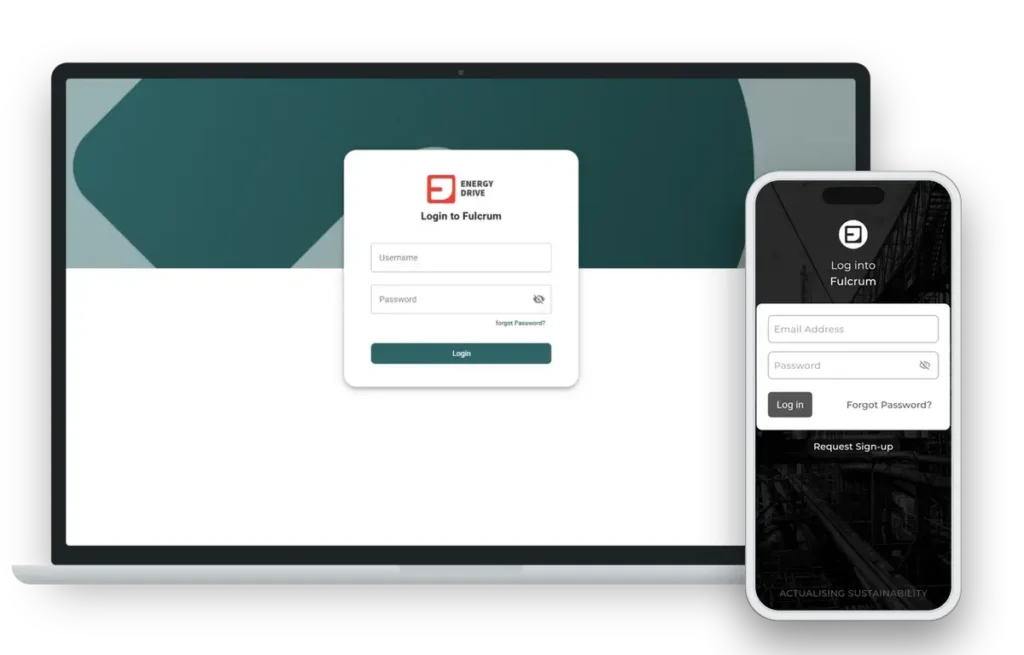
Fulcrum, the industrial IoT platform we built with Energy Drive, from the edge devices on site to the apps their teams use every day.
Fulcrum: an IoT platform for factories, mines and power plants
The challenge
Energy Drive needed reliable data from equipment at industrial sites, many of them remote, with patchy connectivity and very different machinery.
What we built
Low-level software on Raspberry Pi edge devices, a cloud platform to collect and process the data, and a web app and mobile app for engineers and clients.
The result
One platform that brings data from factories, mines and power plants together, with the insight to act on it.
It depends on the number of sites and devices, the hardware needed, connectivity and the software on top. We start with a proof of concept on one site, which gives you real numbers for the hardware, running costs and the value of the data before you commit to a full rollout.
Usually, yes. Many industrial sites already have PLCs and meters that can be read over Modbus. We connect to what’s there wherever we can, and recommend new sensors or hardware only where there’s a gap.
Our edge gateways are built offline-first. They keep collecting and storing data through dropped signals and power cuts, then send everything on once the connection returns, so nothing is lost.
Devices authenticate before they can send data, data is encrypted in transit, and access to dashboards and controls is role-based, with audit trails of who did what.
We do, under a service level agreement. We manage device fleets with Daployi, our own platform, which lets us monitor device health, roll out updates and roll them back remotely, without sending someone to site.
Tell us about your devices and sites
Share what you would like to monitor or control, where your sites are and what equipment is already in place. We will get back to you within one working day.